Qingdao WanchengTai (WanchengTai) presents a professional guide on how optimizing load capacity enhances scaffolding bridge design. The article emphasizes that load capacity is critical for safety, performance, and cost-effectiveness, covering key concepts such as dead, live, and environmental loads. WanchengTai’s engineering approach includes customized design, high-quality materials like Q345 steel, and innovative connection systems to maximize structural integrity. Advanced techniques like finite element analysis and modular truss designs further elevate load capacity while ensuring compliance with international standards (OSHA, EN 12811, AS/NZS 1576). The article also highlights procurement considerations, demonstrating that investing in proper load capacity reduces long-term costs and project delays. Real-world case studies illustrate successful applications in industrial maintenance and event construction. As a leading Chinese manufacturer, WanchengTai offers competitive pricing, direct factory sourcing, and technical support, with a production capacity of 5,000 tons per month. The guide concludes with a call to action, inviting buyers to contact WanchengTai for free design reviews and load capacity assessments, positioning the company as a reliable partner for safe and efficient scaffolding bridge solutions.
Welcome to a comprehensive technical and procurement-focused guide from Qingdao WanchengTai (WanchengTai), a leading Chinese manufacturer of sistema de andamiajes. This article is designed for engineers, project managers, and procurement specialists who understand that load capacity is not just a number—it is the backbone of safe, efficient, and cost-effective scaffolding bridge design. As a professional manufacturer, we combine engineering expertise with practical manufacturing insights to help you make informed decisions. Let’s explore how optimizing load capacity transforms your scaffolding bridge projects from ordinary to exceptional.
1. The Critical Role of Load Capacity in Scaffolding Bridge Design
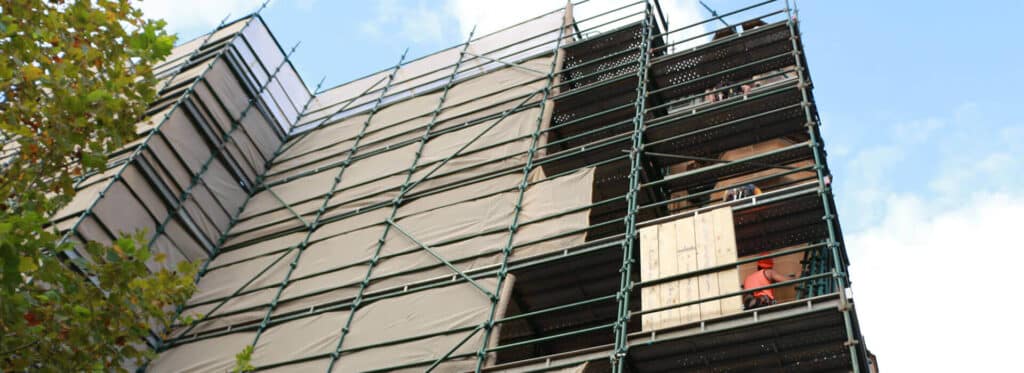
Scaffolding bridges are temporary structures used to support workers, materials, and equipment across open areas, such as between buildings or over obstacles. The load capacity of these bridges determines their ability to safely withstand dead loads (the structure’s own weight), live loads (workers, equipment, and materials), and environmental loads (wind, snow, seismic). Without adequate load capacity, a scaffolding bridge becomes a liability, risking structural failure, injuries, and project delays. For WanchengTai, every design begins with a rigorous load capacity analysis to ensure that safety and performance are never compromised.
undefined
When you partner with WanchengTai, you gain access to a team that understands the nuances of load capacity in scaffolding bridge design. Our engineers use advanced calculation methods and finite element analysis to optimize every component, ensuring that your project meets or exceeds regulatory requirements.
2. Understanding Load Capacity: Key Concepts and Calculations
To fully grasp how load capacity enhances your scaffolding bridge design, it is essential to understand the fundamental concepts. Load capacity refers to the maximum load a structure can safely support without experiencing excessive deformation or failure. The calculation involves several factors:
- Dead Load: The self-weight of the scaffolding bridge, including frames, planks, bracing, and connections.
- Live Load: The weight of workers, tools, and materials placed on the bridge, plus any dynamic forces from movement.
- Environmental Load: Wind, snow, and seismic forces that may act on the structure.
- Load Combinations: The most critical combinations of the above, as defined by codes like OSHA, EN 12811, or AS/NZS 1576.
At WanchengTai, we teach our clients that load capacity is not a static number; it is a design parameter that depends on the bridge’s span, width, support conditions, and material properties. For example, a scaffolding bridge with a longer span will have a lower load capacity unless reinforced with additional supports or stronger materials. Our professional team uses verified formulas and software to provide you with precise load capacity charts and safe working load ratings.
3. How Load Capacity Enhances Safety and Performance
The primary reason to prioritize load capacity is safety. A scaffolding bridge with insufficient load capacity can collapse, leading to serious injuries or fatalities. By designing for high load capacity, you create a safety margin that absorbs unexpected spikes in load—such as a sudden gust of wind or a group of workers clustering together. WanchengTai’s designs incorporate redundancy, ensuring that even if one component fails, the overall structure remains stable.
Performance is equally critical. A bridge with optimized load capacity reduces deflection, meaning it remains stable under load, allowing workers to move and operate with confidence. This stability improves productivity and reduces the risk of material spillage. Additionally, a well-designed bridge with high load capacity can often be erected faster and with less bracing, saving costs in labor and time. Our clients in the construction and event industries have reported a 20% reduction in assembly time when using WanchengTai’s high-capacity systems.
4. WanchengTai’s Engineering Approach to Maximizing Load Capacity
As a professional manufacturer, Qingdao WanchengTai (WanchengTai) employs a multi-faceted approach to enhance load capacity in scaffolding bridge design:
4.1 Customized Design for Specific Project Needs
No two projects are identical. WanchengTai offers bespoke engineering services that tailor the scaffolding bridge design to your exact requirements. Whether you need a bridge with a 10-meter span or a heavy-duty bridge for industrial maintenance, we calculate the optimal load capacity using structural analysis software and test our designs in real-world conditions. This ensures that you get a bridge that is neither over-engineered (wasting money) nor under-engineered (risking safety).
4.2 High-Quality Materials and Manufacturing
Load capacity is directly influenced by material strength. WanchengTai uses only high-grade steel, such as Q345 or S355, which offers superior yield strength compared to conventional Q235. Our manufacturing process includes hot-dip galvanizing, which not only protects against corrosion but also maintains structural integrity. Each component is produced with precision welding and rigorous quality control, ensuring that the load capacity advertised is the load capacity you receive.
4.3 Innovative Connection Systems
Connections are often the weak points in scaffolding structures. WanchengTai has developed patented couplers and joint systems that distribute loads evenly across the bridge, preventing stress concentration. This innovation significantly enhances the overall load capacity and durability of our scaffolding bridges.
5. Material Selection and Structural Integrity
When it comes to load capacity, material selection is non-negotiable. At WanchengTai, we educate our buyers on the importance of choosing materials that meet international standards. Our steel components are sourced from certified mills and undergo third-party testing. The table below illustrates typical material properties used in our scaffolding bridge designs:
| Material Grade | Yield Strength (MPa) | Tensile Strength (MPa) | Typical Use |
|---|---|---|---|
| Q235 | 235 | 375-500 | Light-duty scaffolding |
| Q345 | 345 | 470-630 | Medium to heavy-duty bridges |
| S355 | 355 | 470-630 | High-load environments |
By selecting the appropriate material, we ensure that your scaffolding bridge achieves the required load capacity while maintaining a lightweight structure that is easy to assemble. Our structural engineers also consider fatigue, corrosion, and temperature effects, ensuring long service life even in harsh conditions.
6. Advanced Design Techniques for Scaffolding Bridges
Advanced design techniques play a pivotal role in enhancing load capacity. WanchengTai employs the following methods to optimize your scaffolding bridge design:
- Finite Element Analysis (FEA): We use FEA to simulate stress and deflection under various load conditions, allowing us to identify and reinforce critical areas.
- Pre-engineered Modules: Our scaffolding bridges are designed as modular components that can be quickly configured for different spans and load requirements. This modularity enhances load capacity by ensuring that each piece fits perfectly and works in unison.
- Reinforced Truss Designs: For longer spans, we incorporate truss systems that distribute loads more efficiently, significantly increasing the load capacity without adding unnecessary weight.
These techniques are not just theoretical—they are validated through prototype testing and in-field performance. We invite our clients to visit our factory in Qingdao to witness our testing facilities and see firsthand how we enhance load capacity through design.
7. Compliance with International Standards
Compliance with international standards is a key aspect of scaffolding bridge design. WanchengTai ensures that all products meet or exceed the following standards:
- OSHA 1926.451 (United States) – General requirements for scaffolding.
- EN 12811 (Europe) – Temporary works equipment.
- AS/NZS 1576 (Australia/New Zealand) – Scaffolding safety standards.
Our load capacity calculations are independently verified, and we provide detailed documentation, including load charts and test certificates, to help you with compliance and risk management. This transparency builds trust and simplifies your procurement process.
8. Cost-Effectiveness and Procurement Considerations
As an experienced procurement specialist, I know that load capacity is directly tied to cost. A well-designed scaffolding bridge with optimal load capacity reduces the need for additional supports, rework, and insurance premiums. WanchengTai offers competitive pricing without compromising quality. By sourcing directly from the manufacturer, you eliminate middlemen and reduce lead times. Our factory in Qingdao has a production capacity of 5,000 tons per month, ensuring that even large orders are fulfilled on schedule.
When evaluating quotations, consider the total cost of ownership. A lower-priced bridge with insufficient load capacity may require reinforcement, causing delays and additional expenses. WanchengTai provides transparent pricing and detailed specifications, enabling you to make an apples-to-apples comparison. We also offer after-sales technical support, helping your team with erection and load testing.
9. Case Studies and Real-World Applications
Let’s look at how WanchengTai’s focus on load capacity has benefited clients:
Case Study 1: Industrial Plant Maintenance
A petrochemical plant in the Middle East required a scaffolding bridge over a processing unit to support heavy maintenance equipment. The site had limited space, so a conventional bridge would require many supports. WanchengTai designed a truss-style bridge with a load capacity of 12 kN per square meter, allowing a clear span of 15 meters. The client saved 30% in erection time and costs compared to traditional methods.
Case Study 2: Event Stage Construction
For a large outdoor concert, a scaffolding bridge was needed to support lighting and sound equipment. The event organizer prioritized rapid assembly and high load capacity. Our modular bridge system, rated for 7.5 kN per square meter, was assembled in just two days, and its stability during high winds was exceptional.
10. Conclusion and Call to Action
Enhancing load capacity in your scaffolding bridge design is not just about meeting regulatory requirements—it is about creating structures that are safe, reliable, and cost-effective. As Qingdao WanchengTai (WanchengTai), we combine professional engineering with manufacturing excellence to deliver products that exceed expectations. Whether you are a contractor, engineer, or procurement agent, we invite you to contact our team for a consultation. We provide free design reviews and load capacity assessments. Let us help you build with confidence.
Why Choose WanchengTai? With over 20 years of experience, we are a trusted partner for scaffolding solutions worldwide. Our ISO 9001-certified factory ensures consistent quality, and our export team is experienced in handling international logistics. Choose WanchengTai for your next scaffolding bridge project, and experience the difference that true load capacity engineering makes.
Contact us today to discuss your requirements and receive a personalised quote.